My Role
Product Designer
User Research
Tools
Figma
FigJam
Lovable
Timeline
Two Weeks

The Problem
Anxious Thoughts Wake People Up

What wakes you up at night?
I wake up thinking about work
or things I need to do tomorrow :(

Unprocessed thoughts like to do lists, work worries, anxiety emerge during the early phase of sleep, waking people up in the night and leaving them feeling unrested the next day.
The Opportunity
70% Of Adults Report Poor Sleep Weekly
Yet most apps only focus on reaction, soothing the mind after it’s racing.
I designed an app that focus on prevention, helping users release anxious thoughts before sleep, promoting uninterrupted rest.
The Solution
Wake Up Feeling Rested
The app guides users through three short journaling prompts, giving the mind a moment to process and release anxious thoughts before sleep.
Research
How User Interviews Shaped The Design Direction
Research and interviews into sleep psychology and behaviour change showed two ways to support the anxious mind at night.
User Insight
I wake up thinking about work
or things I need to do tomorrow :(
Jess
Product Manager
Surface Behaviour
I noticed users often try to distract themselves
before sleep, reading, scrolling, or using
soothing sounds.
Underlying Need
These distractions don’t release the thoughts.
Users need a way to let go of anxious
thoughts before sleep.
Key Insight
Unprocessed thoughts resurface at night,
waking users up and interrupting their sleep
Design Direction
How might we create a simple, low-effort ritual
that helps users release these thoughts before bed?
Isaac
UX Designer
Ideation
Starting Exploration With Guidance From Sleep Experts
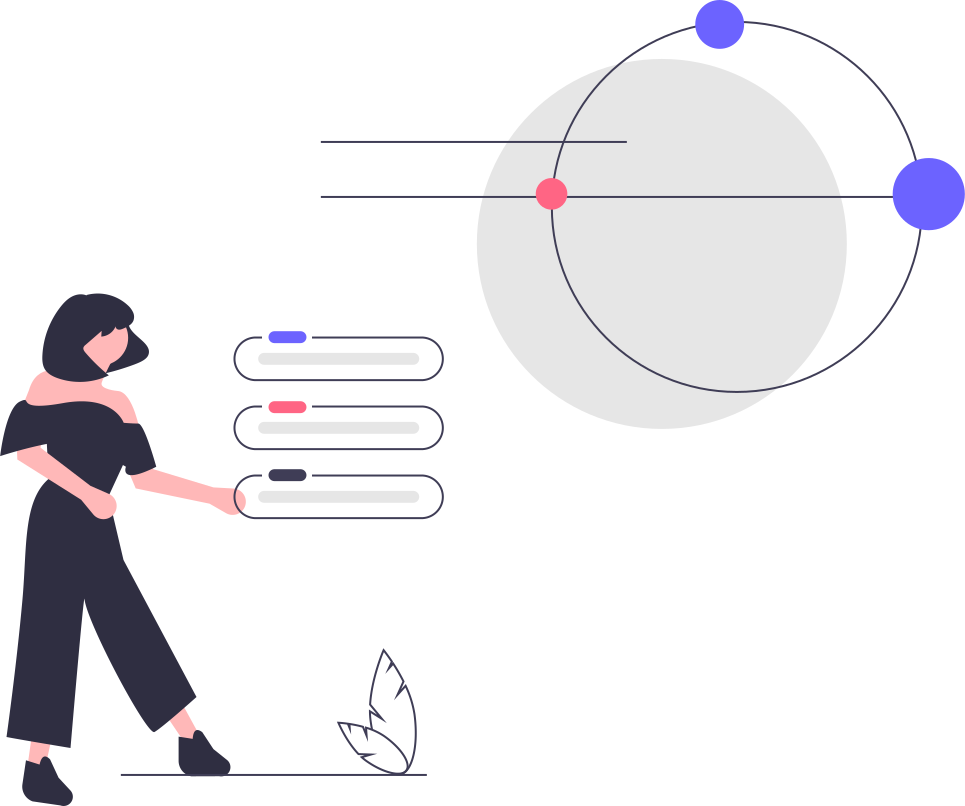
I needed to find out the solutions experts are currently using to help people release anxious thoughts and scope out whether they'd work for the users I spoke to. There were three main solutions from psychologists;
Solution 1 - Cognitive Reframing
Examine and Restructure Thoughts
Users actively identify patterns in their worries and reframe
them to reduce emotional impact.
Should We Explore?
Clinically effective, could help users process thoughts
before sleep. Worth testing if it could work with
low mental energy.
Solution 2 - Journaling / Cognitive Offloading
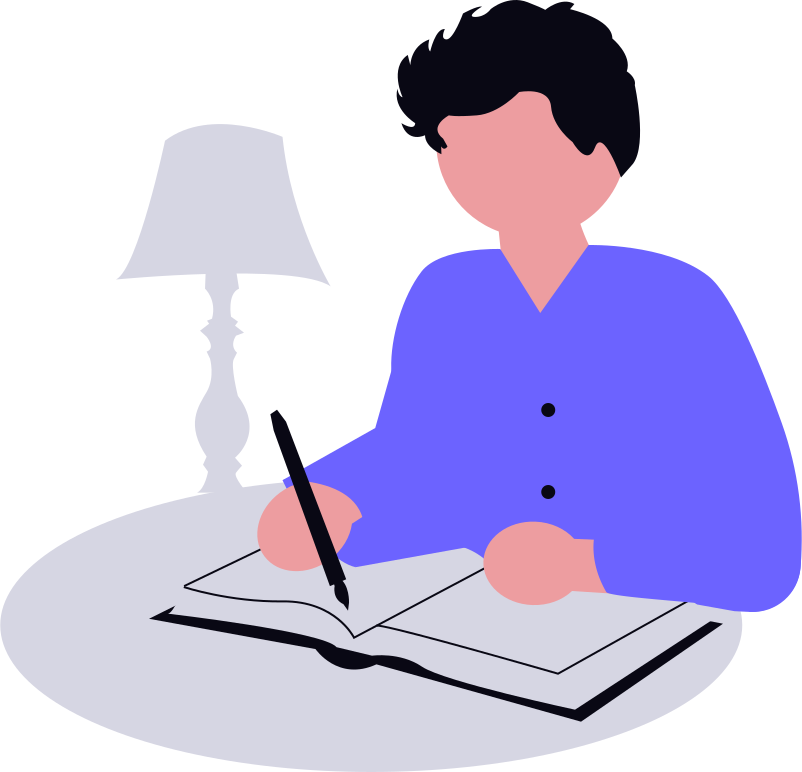
Externalize Thoughts to Let Go
Users write down anxious or unfinished thoughts
so the mind no longer needs to process them during sleep.
Should We Explore?
Low effort, bedtime-friendly, supports calmness.
Promising approach to prevent middle-of-the-night wakeups.
Solution 3 - Soothing / Reactive Calm
Guided Audio, Sounds and Relaxation
Apps like Calm and Headspace already focus on reactive
methods to calm a racing mind..
Should We Explore?
It’s well-served by existing solutions; our focus was on a preventive method that helps the mind before sleep.
Prototyping
Choosing The Concept That Matched
Users Low Mental Energy At Bedtime
Now I had decided on our two solutions. I needed to get feedback from users and understand which concept would work better for them.

Exploration 1: Grouping & Reframing Thoughts
Actively examining and restructuring anxious thoughts by mind-mapping, identifying patterns and grouping related worries.
Conclusion
Perceived as too high effort like a 'chore'
Mismatched with low mental energy at bedtime
Exploration 2: Journaling Out Thoughts
Writing thoughts down to offload them externally,
so the mind doesn’t need to process them during sleep.
Conclusion
Low effort, effective with low bedtime energy
Supports relaxation before sleep.
Usability Testing
Language Makes Or Breaks The Experience
Users found the copy directive and pressuring, like a teacher. We softened the tone to create a gentle, optional and inviting experience that felt like a thoughtful friend.
Before
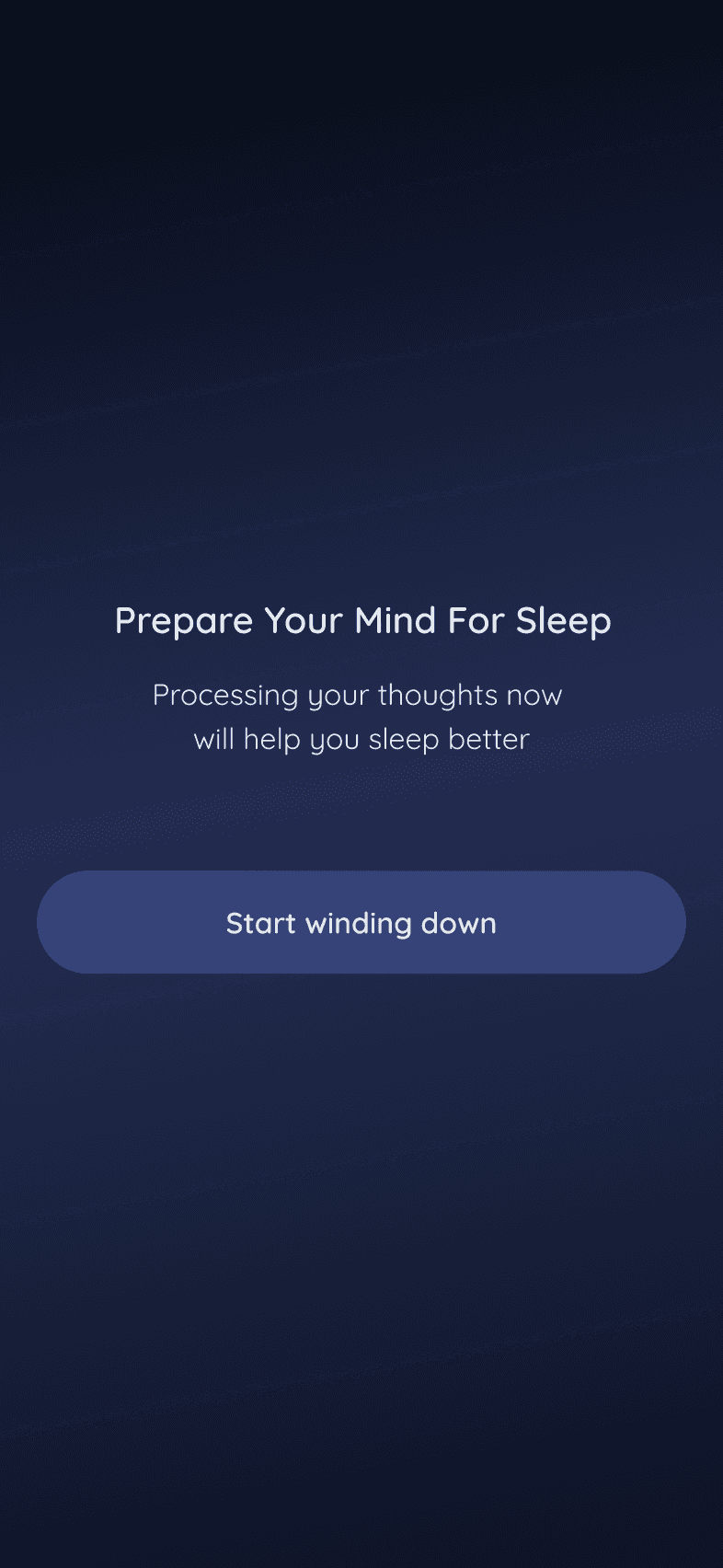
+ Inviting
+ Optional
After
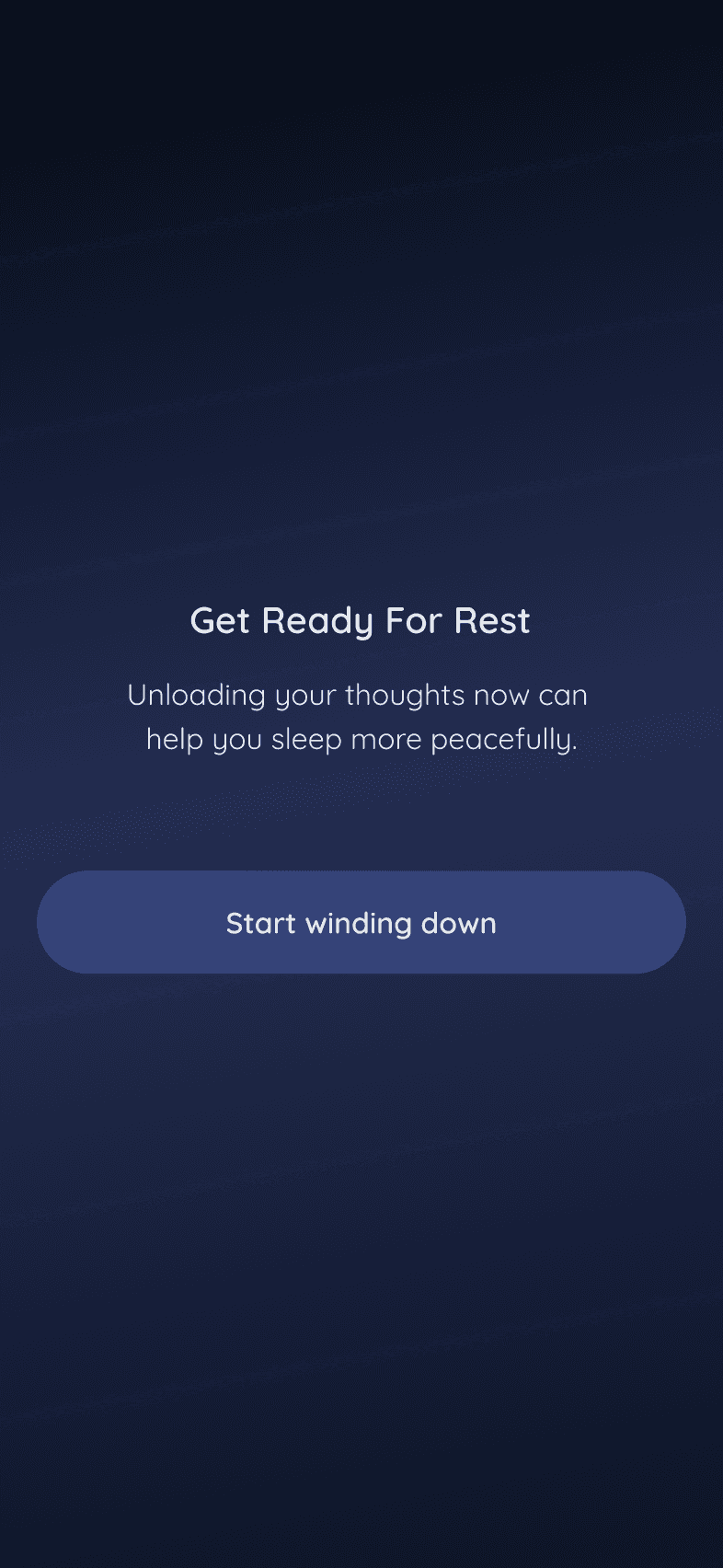
Users saw the original text as directive — we softened it to feel optional and inviting, so journaling felt like something they want to do, not a chore.
Before
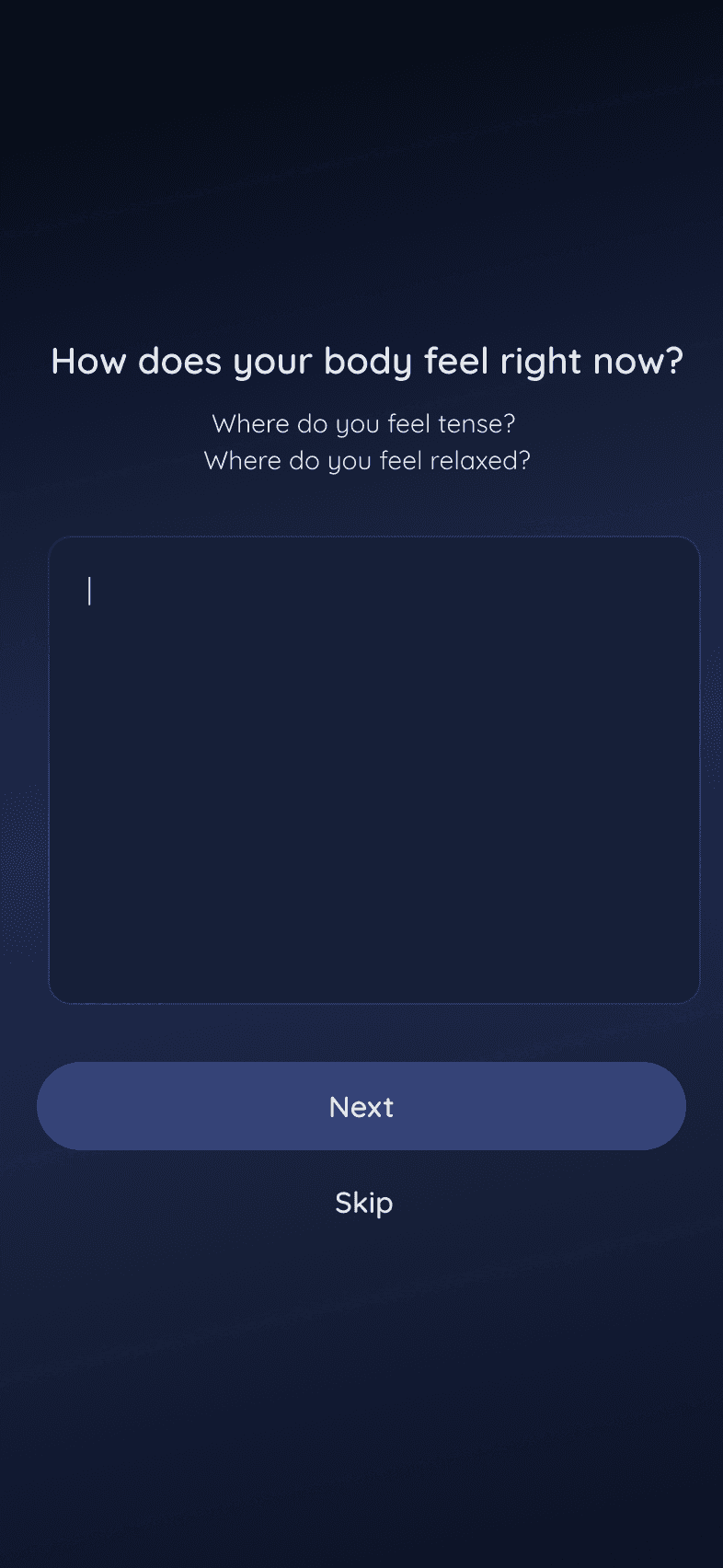
+ Don't Make
Users Think
After
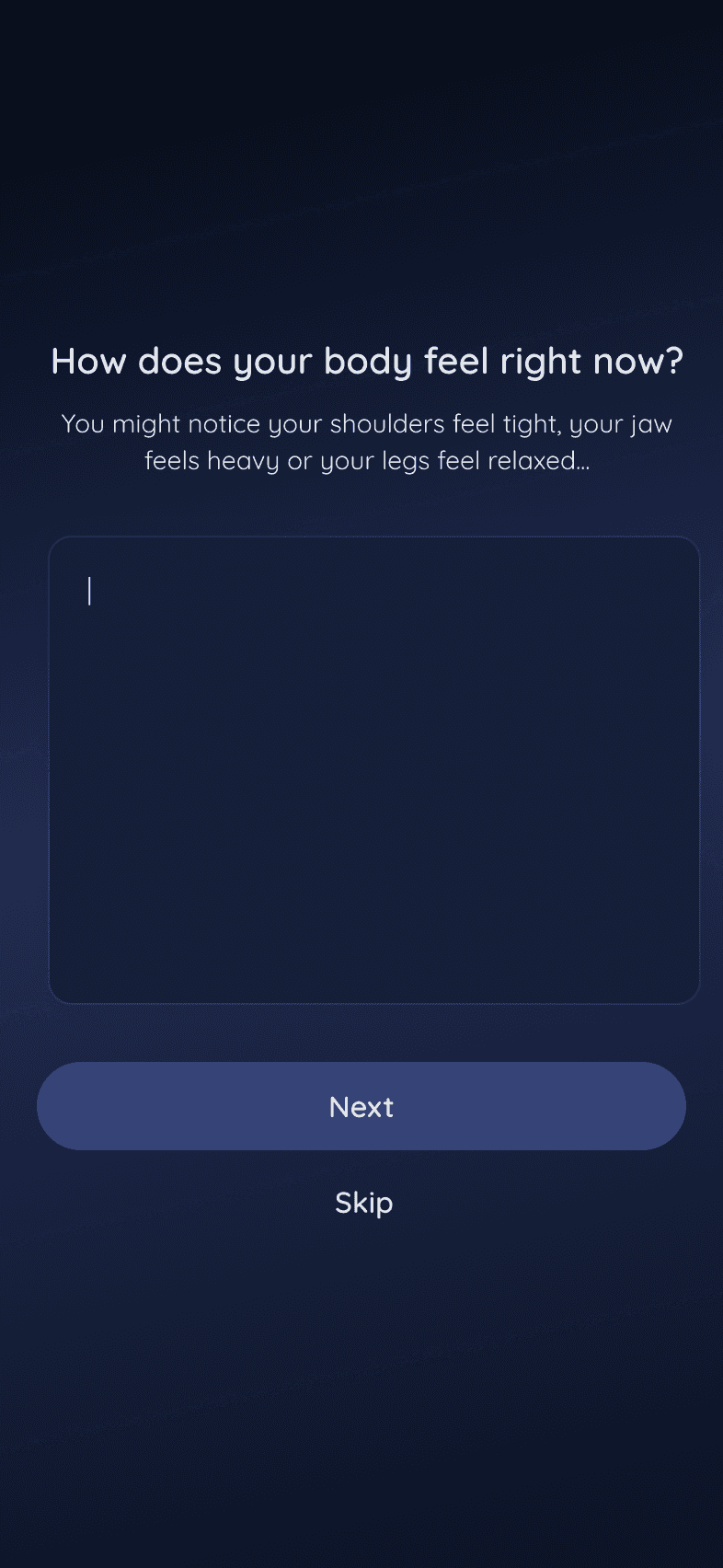
Added guidance to reduce hesitation, letting users start typing immediately without overthinking, lowering perceived effort.
Design System
Designing for Bedtime
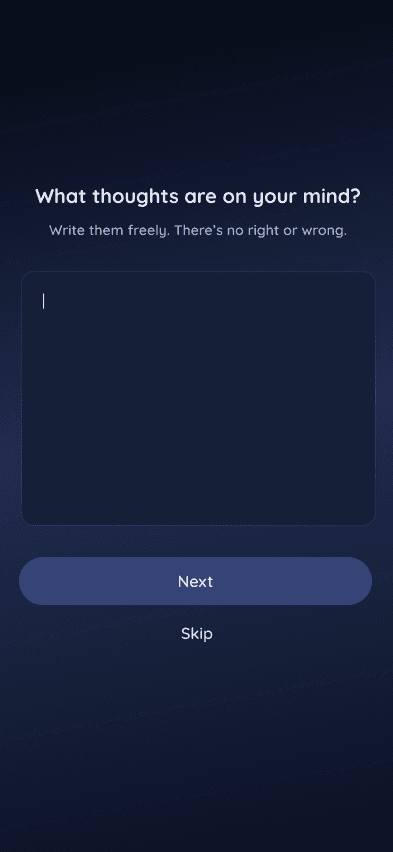
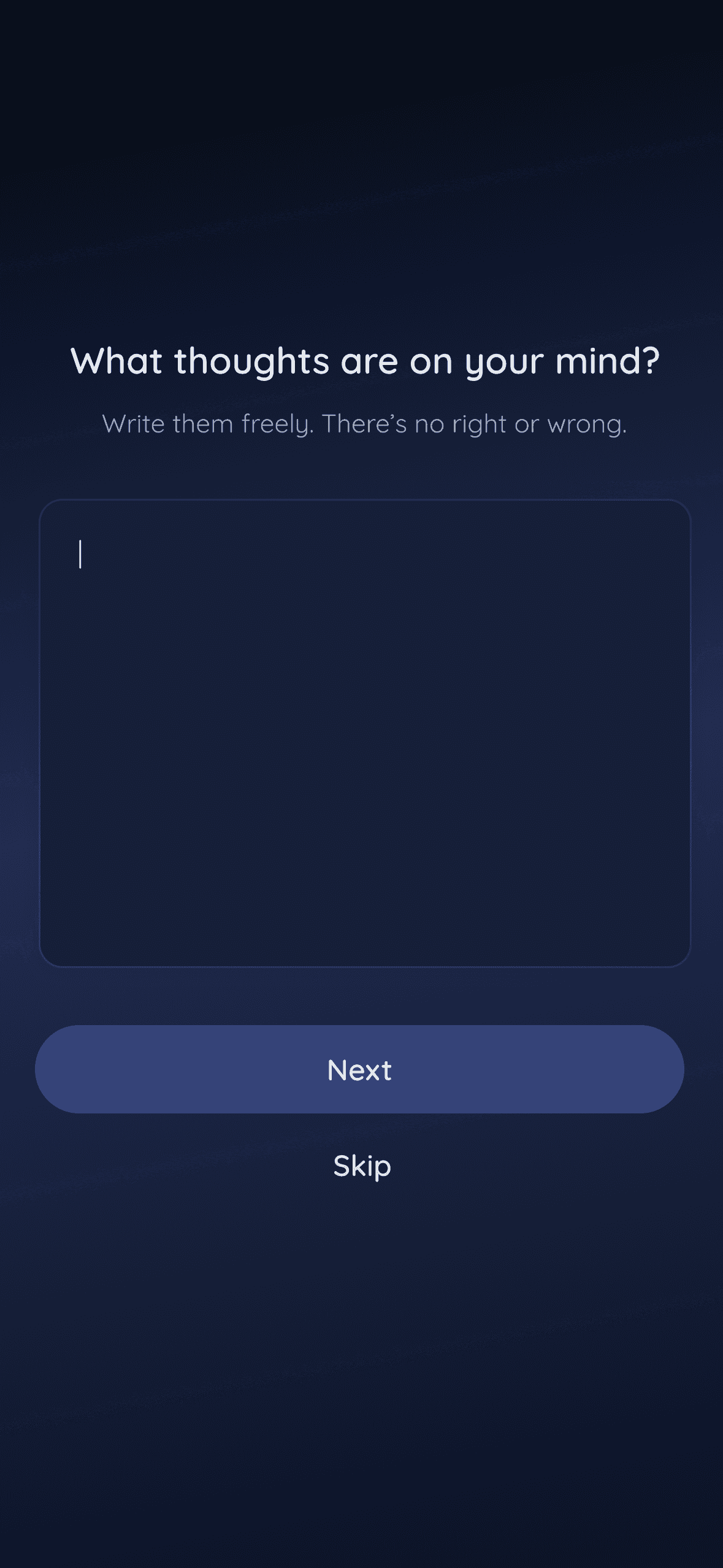
Bedtime is a low-energy, high-sensitivity state. Visual stimulation that works during the day can feel intrusive at night. We designed with restraint: muted colours, soft contrast, minimal motion and little imagery, so nothing competes for attention or elevates alertness.
COLOURS
Main Blue
#354378
Main Blue - Gradient
#060B15 - #0B1328
Deep Blue
#162038
Text - Heading
#E6EAF0
Text - Helper Copy
#AAB3C6
Text - Placeholder
#9CA3AF
INPUT FIELDS
You can write here…
Inactive
You can write here…
You can write here…
Active
TYPOGRAPHY
Aa
Quicksand
NAME
SIZE
WEIGHT
PURPOSE
H1
22
SemiBold
Notification Title
H2
20
SemiBold
Prompt/Quote Headings
Primary Button
16
SemiBold
Button Text
Body
16
Regular
Text Input
Body Small
14
Regular
Question Helper Copy
Final Designs
Contact Me